
Carpal Tunnel vs. De Quervain’s: How to Tell Which One Is Causing Your Hand Pain
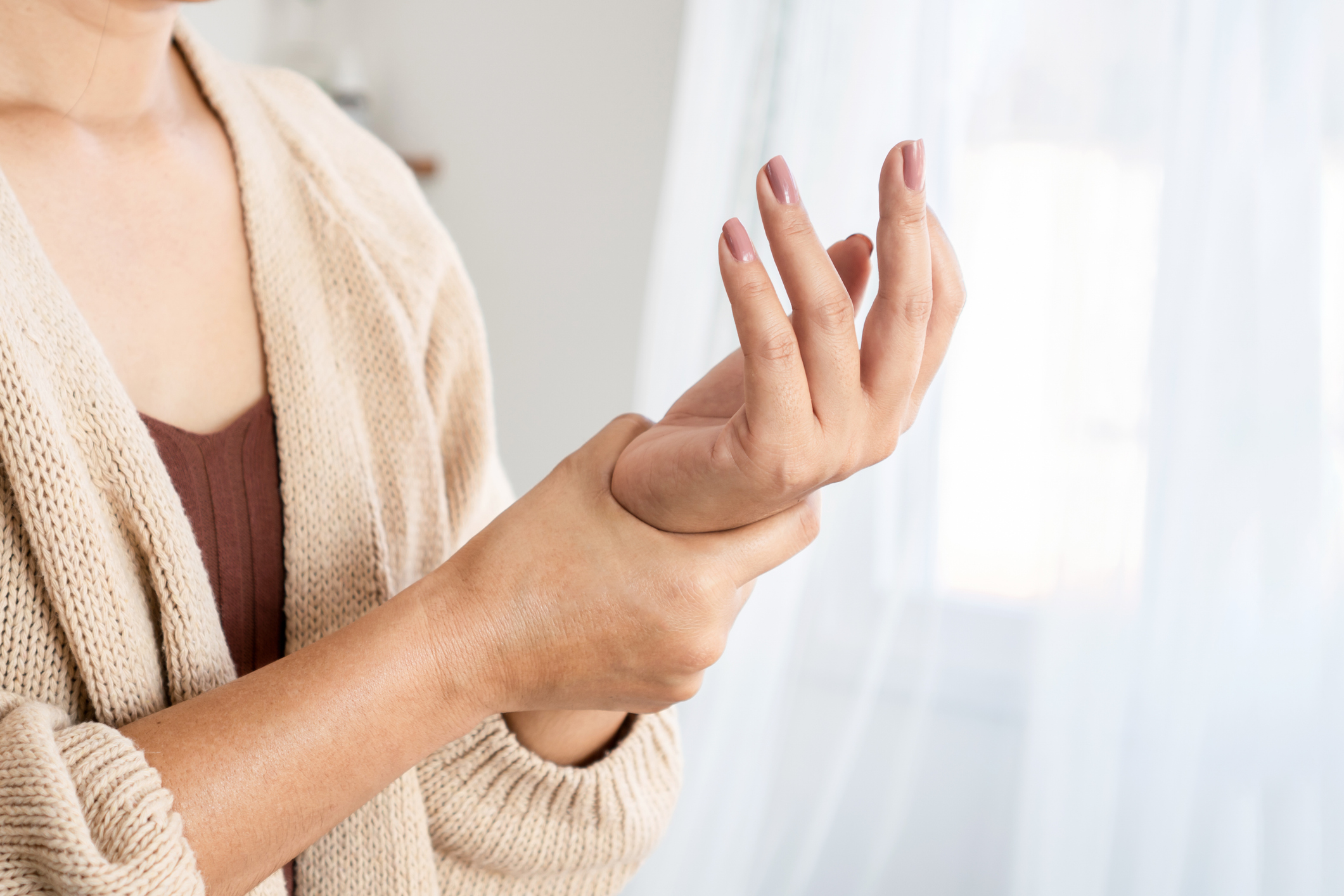
Carpal tunnel syndrome and De Quervain’s tenosynovitis both cause hand and wrist pain, and they’re easy to confuse. But one is a nerve problem, and the other is a tendon problem. That difference changes everything about how they’re treated.
Knowing which one you’re dealing with is the first step toward easing the pain and getting the right care.
At a Glance: Carpal Tunnel vs. De Quervain’s
- Carpal tunnel syndrome (CTS) is a nerve problem; De Quervain’s is a tendon problem.
- CTS causes numbness and tingling in the fingers; De Quervain’s is primarily pain at the base of the thumb.
- Carpal tunnel symptoms are often worse at night; De Quervain’s flares during gripping and movement.
- The location of your pain is the biggest clue to which condition you have.
- Both respond well to treatment when they’re caught early.
They’re Actually Two Very Different Conditions
Carpal tunnel is a nerve condition. The median nerve passes through a narrow passageway on the palm side of your wrist, and when pressure builds there, it compresses the nerve, producing the numbness, tingling, and weakness so many people recognize.
De Quervain’s is a tendon condition. Two tendons on the thumb side of your wrist, the ones that control thumb movement, become inflamed and irritated inside the narrow sheath they travel through. No nerve compression is involved, which is why the two feel so different.
What Does Carpal Tunnel Syndrome Feel Like?
The hallmark of carpal tunnel syndrome is numbness and tingling in the thumb, index, middle, and ring fingers. The pinky is almost never affected, which helps narrow things down. Many people describe it as burning or a mild electric shock that travels from the palm up the arm.
Symptoms are typically at their worst at night. A lot of people wake up with numb, tingling hands and need to shake them out to get relief. Symptoms also flare while holding a phone, gripping a steering wheel, or typing.
Risk factors include repetitive wrist flexion, prolonged gripping, pregnancy, diabetes, and arthritis. Up to 6% of U.S. adults experience it, making it one of the most common conditions an orthopedic hand specialist treats.
What Does De Quervain’s Feel Like?
De Quervain’s pain centers at the base of the thumb and along the thumb side of the wrist, and it can travel up into the forearm. It’s not about numbness or tingling. It’s about pain with movement.
Gripping, pinching, twisting, and making a fist all aggravate it. Tasks like turning a key, lifting a bag, or picking up a child can reproduce the pain immediately. Swelling at the base of the thumb is also common.
Women are 8 to 10 times more likely to develop it than men, and it’s especially common in new parents after delivery. That said, gardeners, golfers, construction workers, and frequent phone users across the Midlands all commonly develop it too.
How Can You Tell Them Apart?
Numbness and tingling in your fingers, especially at night, point toward carpal tunnel. Pain at the base of your thumb that flares when you grip or pinch something points toward De Quervain’s.
For De Quervain’s, there’s a quick test called the Finkelstein test. Bend your thumb across your palm and fold your fingers down over it. If that produces sharp pain on the thumb side of your wrist, De Quervain’s is likely involved. For carpal tunnel, a doctor uses Phalen’s maneuver (holding the wrist in a flexed position for about a minute) or Tinel’s sign (tapping over the wrist nerve) to reproduce symptoms.
Both conditions can exist at the same time, and symptoms can overlap in ways that make self-diagnosing unreliable. A proper evaluation is the only way to know what you’re actually dealing with.
What Does Treatment Look Like for Each Condition?
For carpal tunnel, treatment typically starts with a wrist splint worn at night to reduce pressure on the nerve. Corticosteroid injections can lower inflammation and provide real relief. For cases that don’t respond, carpal tunnel release surgery creates more room for the nerve and resolves symptoms for most patients.
For De Quervain’s, the American Academy of Orthopedic Surgeons notes that most patients do well without surgery. A thumb spica splint, activity modification, anti-inflammatory medication, and a corticosteroid injection are usually the starting point, and many people see meaningful improvement within a few weeks. Surgery to release the tendon sheath is available for cases that don’t improve after about six weeks.
Both conditions respond much better the earlier they’re caught. Pushing through persistent pain almost always makes things harder to manage.
Frequently Asked Questions: Carpal Tunnel Syndrome & De Quervain’s
Can you have carpal tunnel syndrome and De Quervain’s at the same time?
Yes, and it happens more often than people expect. The two conditions affect different structures within the same wrist area, so having one doesn’t rule out the other. If you’re experiencing both finger numbness and thumb-side pain, an orthopedic evaluation is the best way to get a clear answer.
What can I do at home to ease hand pain while I wait to see a doctor?
Resting the affected hand, avoiding movements that trigger symptoms, and applying ice for 15 to 20 minutes at a time can help reduce inflammation. Over-the-counter anti-inflammatory medications like ibuprofen may also take the edge off. These steps help manage discomfort temporarily but aren’t a substitute for a proper diagnosis, especially if symptoms are persistent or getting worse.
When should I see a doctor about hand or wrist pain?
If your pain keeps coming back, gets worse over time, or is affecting everyday tasks like typing, gripping, or buttoning a shirt, it’s time to get evaluated. Numbness that wakes you up at night, weakness in your grip, or pain traveling up your forearm are all signs that something structural is going on. An orthopedic specialist can examine your symptoms and give you a clear picture of what’s happening and what your options are.
What Your Hand Is Trying to Tell You
Both carpal tunnel syndrome and De Quervain’s tenosynovitis are very treatable, especially when they’re caught early. Persistent hand or wrist pain isn’t something to push through and hope resolves on its own. The biggest mistake people make is waiting too long.
Get Your Hand and Wrist Pain Evaluated in Chapin, Irmo, or Newberry with Palmetto Bone & Joint
If hand or wrist pain is affecting your daily life, the team at Palmetto Bone & Joint is here to help.
Call us at (803) 599-3489 or contact us online to schedule an appointment at our Chapin, Irmo, or Newberry locations.
Related Posts

Why Fall Is the Smartest Time to Schedule Your Joint Replacement Surgery
If you’ve been managing joint pain through another summer and telling yourself you’ll deal with…

Laminoplasty vs. Spinal Fusion: How to Know Which Surgery Is Right for You
A hand that won’t quite cooperate, a grip that keeps slipping, numbness that spreads instead…
Cartilage Defects 101: What They Are and Why Early Treatment Matters
A cartilage defect is a localized area of damage to the smooth, protective surface that…