
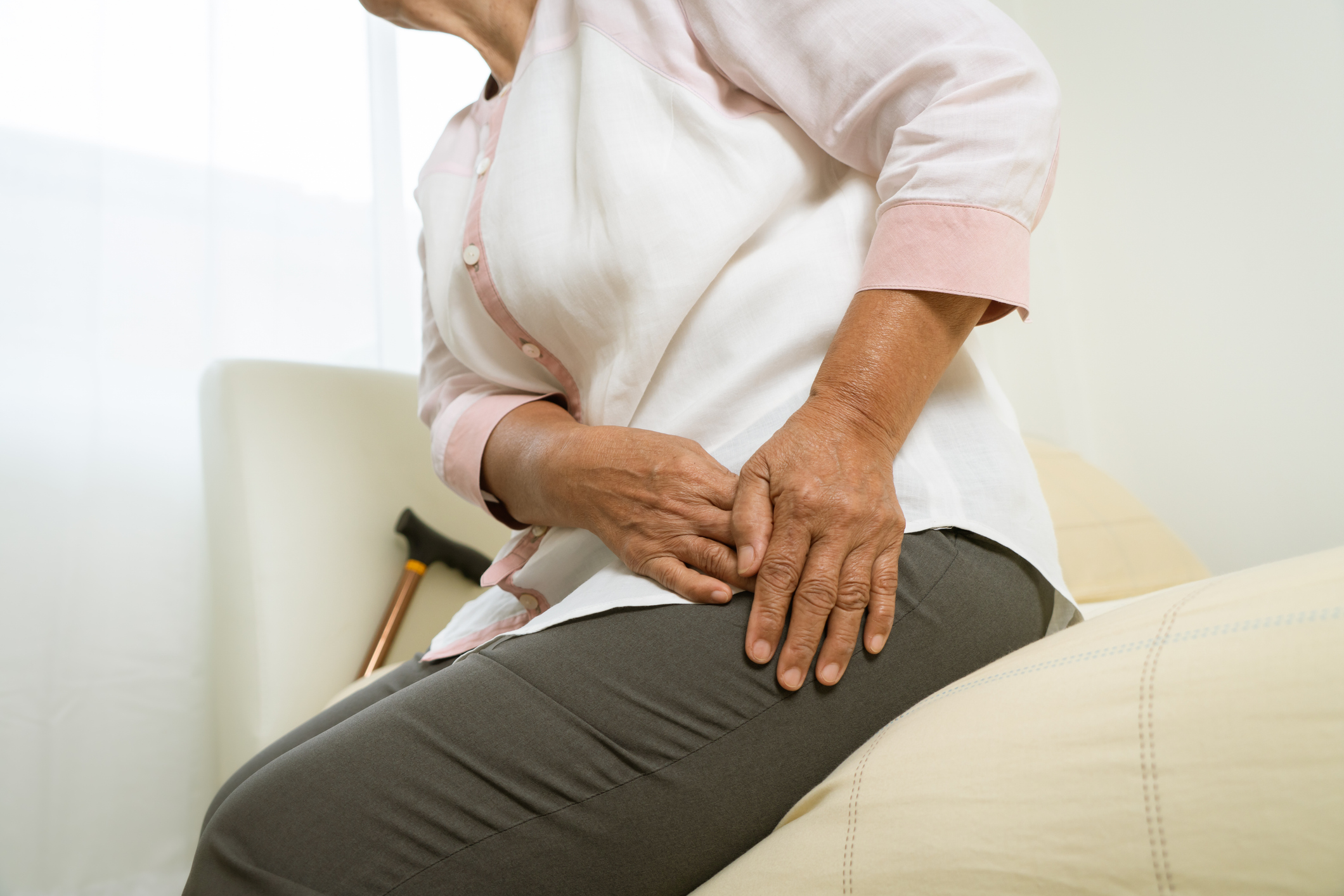
5 Signs Your Hip Pain Is More Than Just Aging (and What to Do About It)
Certain patterns of hip pain are your body signaling that something beyond normal wear is going on, and knowing what to do about hip pain starts with recognizing those signals early. Hip pain is easy to explain away as a bad night’s sleep, an overdone day in the yard, or just part of getting older. Sometimes that’s true. But earlier evaluation almost always means more options and better long-term outcomes. Here are five signs your hip pain deserves a closer look.
In Summary: Hip Pain Warning Signs
- Hip pain that wakes you from sleep or gets worse when lying down is a recognized clinical warning sign
- Pain in the groin or inner thigh, not the outer hip, is often the first signal of an actual joint problem
- Pain that flares during prolonged sitting or when standing up from a chair can indicate joint damage or a labral tear
- A subtle change in how you walk often means the hip has been managing pain for longer than you realize
- When hip pain starts limiting daily activities like stairs, walking, or getting in and out of a car, it’s time to get evaluated
Sign 1: Hip Pain That Worsens at Night
If you’re waking up because of hip discomfort, can’t find a position that doesn’t aggravate it, or feel a dull ache building as you try to fall asleep, that pattern isn’t something to chalk up to age. Hip pain that worsens at night is a consistent feature of both hip osteoarthritis and trochanteric bursitis, two of the most common hip conditions in adults.
Bursitis-related nighttime hip pain is especially pronounced when lying on the affected side. The inflamed bursa (a small fluid-filled sac that cushions the outer hip) gets compressed under body weight for hours at a time. With osteoarthritis, inflammatory activity builds during periods of rest, causing the joint to stiffen progressively through the night. Daytime movement provides a constant counterweight to that process. At rest, there’s nothing to distract the brain from the pain signal.
Sleep disruption from hip pain is a clinical warning sign that warrants evaluation, not more over-the-counter pain management.
Sign 2: Why Does Hip Pain Get Worse When Sitting?

Prolonged sitting locks the hip flexors in a shortened position, loading the joint and surrounding tissue with sustained pressure. Hip osteoarthritis characteristically flares when rising from a seated position because the joint surfaces have been compressed and the surrounding tissue stiffens without movement.
A labral tear, which is damage to the ring of cartilage lining the hip socket, produces deep pain, clicking, and catching sensations that worsen with sitting and hip flexion.
Femoroacetabular impingement (FAI), a condition where the hip bones don’t fit together correctly, follows the same pattern.
If you’ve started gripping armrests to stand, or pausing to let your hip settle before walking after sitting, that adaptation is worth discussing with a provider.
Sign 3: Is Groin Pain Actually a Hip Problem?
This is the sign patients miss most often. Most people picture hip pain as something felt on the side of the hip or deep in the buttock. But hip joint problems, especially osteoarthritis, typically present as pain in the groin or inner thigh.
Loss of internal rotation is one of the earliest changes in hip osteoarthritis, and groin pain combined with painful internal rotation is a strong indicator that the problem is inside the joint itself. Pain focused in the groin or thigh is far more likely to reflect a hip joint problem than pain radiating down the back of the thigh, which typically originates in the spine.
If you’ve been treating what seems like a groin strain or inner thigh tightness for weeks without improvement, the source may actually be your hip joint.
Sign 4: You’ve Changed How You Walk Without Realizing It

Joint pain doesn’t become severe all at once. It often slowly manifests over a matter of months or years. Sometimes you start changing your habits based around discomfort in your hip, without even thinking about it.
When the body compensates for hip pain, force shifts to the pelvis and the knee, which frequently generates secondary knee or lower back pain. By the time that secondary, more severe pain shows up, the original hip problem has usually been present for some time.
Sign 5: Hip Pain That Limits What You Can Do
This is the hardest sign to rationalize away. When hip pain consistently keeps you from things you want or need to do, that’s a functional limitation that goes beyond ordinary discomfort.
Approximately 36% of adults aged 45 and older experience hip pain symptoms, including aching or stiffness. That prevalence increases significantly with age. The patients who avoid serious functional decline are typically the ones who get evaluated before limitation becomes significant.
Frequently Asked Questions
What does it mean when hip pain is worse at night?
Hip pain that consistently worsens at night most often points to bursitis or osteoarthritis. With bursitis, lying on the affected hip compresses an inflamed sac, producing sharp pain that builds over hours. With osteoarthritis, the joint stiffens during rest as inflammatory activity increases without movement to counteract it.
Is groin pain a sign of a hip problem?
Yes, and it’s one of the most commonly missed signals. Hip osteoarthritis and labral tears typically produce pain in the groin or inner thigh rather than the outer hip or buttock. Pain that originates in the groin, worsens with walking or rising from a chair, and feels deep rather than surface-level is often coming from the hip joint itself. If groin pain hasn’t responded to several weeks of muscle strain treatment, a hip evaluation is a logical and often overdue next step.
When should I see a doctor for hip pain?
If your hip pain has lasted more than a few weeks without improving, wakes you from sleep, limits daily activities like stairs or walking, or has caused you to start moving differently, those are all reasons to get evaluated. You don’t need to be in severe pain or unable to walk to justify an appointment. An orthopedic specialist can examine your hip, order imaging if needed, and walk you through both surgical and non-surgical treatment options so you understand what’s actually going on and what comes next.
When Hip Pain Is More Than Aging, It Deserves Attention
Persistent or worsening hip pain isn’t something to simply accept. The five signs above are your body communicating that the hip joint needs a closer look. Catching a problem early almost always means simpler treatment, faster recovery, and more of the activities you value still within reach.
Get Your Hip Evaluated in Chapin, Irmo, or Newberry
If you’re experiencing hip pain in the Midlands of South Carolina, the orthopedic team at Palmetto Bone & Joint is here to help. Dr. James Loging is a hip replacement specialist who performed South Carolina’s first anterior hip replacement in 2006, and the team offers both surgical and non-surgical options at every stage of hip care. For more on what recovery can look like, see our post on why fall is a great time to schedule hip replacement surgery.
Call us at (803) 902-3169 or contact us online to schedule an evaluation at our Chapin, Irmo, or Newberry locations.
Related Posts

Why Fall Is the Smartest Time to Schedule Your Joint Replacement Surgery
If you’ve been managing joint pain through another summer and telling yourself you’ll deal with…

Laminoplasty vs. Spinal Fusion: How to Know Which Surgery Is Right for You
A hand that won’t quite cooperate, a grip that keeps slipping, numbness that spreads instead…
Cartilage Defects 101: What They Are and Why Early Treatment Matters
A cartilage defect is a localized area of damage to the smooth, protective surface that…